
Sovereign Startups: Where Income Meets Independence and Impact
Income, independence, and impact. It’s a no-compromise personal enterprise.

Many people in midlife find themselves without economic or personal agency at this point in history.
But as dangerous a situation as that is, it’s not even the whole picture.
Because we’re also seeing a loss of agency when it comes to purpose, or having the ability to choose meaningful work at a time of life when meaning matters more than ever.
I’ve been arguing for years that the true “retirement crisis” is the lack of purpose and meaning that retirees often experience. Without this, money and freedom alone don’t make you feel like you’re living the dream.
Even people who have seemingly solved the problem of economic and personal agency are living their “golden years” depressed, aimless, and even suicidal because they no longer feel that they matter.
The Wall Street Journal tackled this topic in The Retirement Crisis No One Warns You About: Mattering. The piece begins by sharing the disappointment that retired professionals experience when they realize that no one is interested in their continuing contribution.
One woman pitched consulting to local non-profits but got no interest. Another, a retired professor, thought he could assist with teaching classes, only to be rebuffed.
What these retirees were describing wasn’t just disappointment in a lack of opportunities. It was an erosion in something far more fundamental — their sense of mattering, the deep human need to feel valued and to have a chance to add value to the world.
Now think about the crisis of purpose we constantly hear about for those still employed. In an era of mass layoffs and age discrimination, it’s not just that you might not be able to maintain employment during the crucial decade before traditional retirement age.
It’s that you’re not doing work that matters, even if you do stay employed.
The answer to a lack of economic and personal agency is to start a business that can earn from everywhere, so you can be physically located anywhere. And in my experience, the answer to a lack of purpose is the same.
Just about every one of the dozen or so businesses I’ve started over the years has been purpose-driven, and all the highly successful ones certainly were. At this point, I can’t imagine doing it any other way.
That’s why the personal enterprise approach that kicks off the Further Premium training means you view everything you do as an investment into purposeful projects that generate a return. And while the strategy doesn’t necessarily have to be location-independent, the fact that it’s an expertise-driven model means it most often is.
In fact, this approach has been the base of three seven-figure companies and one eight-figure venture between 2007 and 2016. And each one could be operated from anywhere in the world.
At this point, location independence is the driving requirement, not just something nice to have. That’s why I now talk about business-building under the banner of “sovereign startups.”
These tiny companies exemplify both high earning potential and the “live anywhere” solution to economic and personal agency. Add in the purpose-driven component that’s become essential to solopreneur success, and you’ve got all your bases covered.
Income, independence, and impact. It’s a no-compromise personal enterprise.
What is a Sovereign Startup?
Before we dive deeper into starting a sovereign venture, let’s look at some definitions and primary characteristics.
The dictionary definition of “sovereign” that makes the most sense for our purposes is “self-governing; independent.” In the context of the changes the internet brought, the term dates back to the book The Sovereign Individual: Mastering the Transition to the Information Age, published back in 1999.
In the 26 years since its publication, The Sovereign Individual has proved incredibly prescient. Its primary thesis was that the internet and the global digital economy would cause industrial-era nation-states to lose their power.
The authors predicted this would counterintuitively lead to a rise in nationalism (MAGA, Brexit) among some, while allowing digitally savvy people to be independent of geography, government, and traditional employment. Sound familiar?
The book also predicted cryptocurrency, the decline of faith in traditional institutions, digital nomadism, location-independent small businesses, and the current crisis threatening democracy. It became a “bible” of sorts to digital libertarians, although I don’t think the concept requires a particular political viewpoint.
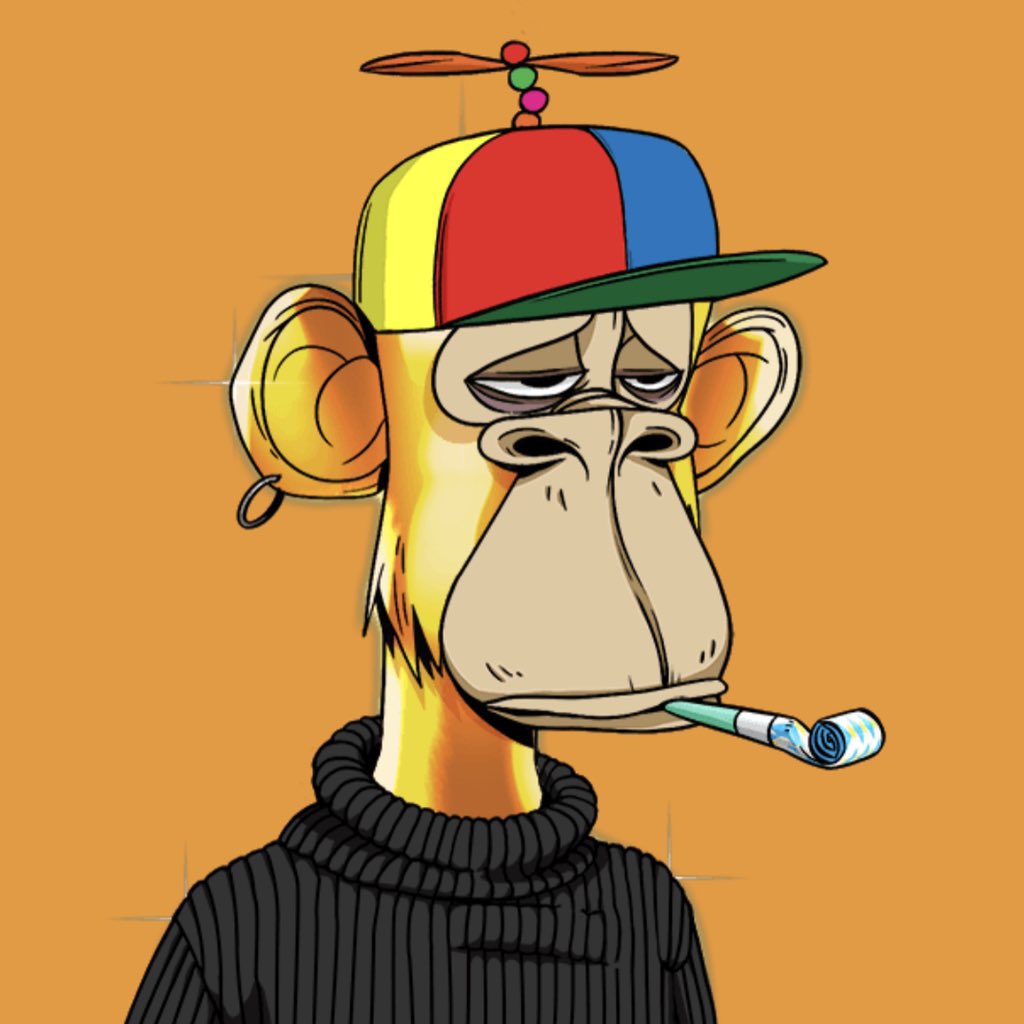
The internet and related technologies enable decentralization. And while “Web3” turned out to be more about aspirational marketing rather than the inherent value of comical ape NFTs, the blockchain technology at the foundation of the movement is still quietly humming along.
While the crypto true-believers were arguing about decentralization theology, something more practical emerged as we moved on to the next big thing: artificial intelligence. In practical terms, decentralisation means organizations shrink in terms of human capital in favor of machine solutions, and AI is more of a catalyst for this than any of the Web3 hoopla.
But AI is not the only necessary technological component. Blockchain is becoming the accounting layer for machines that need to transact with other machines.
While one solopreneur plus AI can replace a 10-person team, you still need an accountability mechanism. When your AI agents are negotiating deals, making purchases, and managing workflows across different platforms, they need a common ledger that doesn’t require human gatekeepers at every step.
That ledger is blockchain, an infrastructure that operates at machine speed. And it will allow AI agents to free us from the rage-baiting environments fostered by social media oligarchs who put profit above people.
When AI agents can transact on decentralized infrastructure, creators won't need permission from platform owners to build audiences, monetize work, or coordinate communities. Platform lock-in disappears, and with it, the rent-seeking middlemen.
Just like we’ll come to see massive corporations as a unique anomaly of the 20th century, we’ll see the dominant internet platforms, once they’re populated more by robots than people, the same way — as temporary aberrations. This continuing decentralization opens the door to countless tiny companies that will create extraordinary opportunities for influence and profit while affording their founders the freedom to travel the world at will.
That’s not to say that nation-states, big corporations, or dominant web platforms will completely disappear. But they won’t have the level of influence that we’ve come to expect, and that’s a good thing.
This is the big picture view behind what I call sovereign startups. While the individual can indeed have more independence and creative autonomy than ever, this will happen within the framework of limited liability entities that easily transcend national borders.
The Defining Characteristics
Now let’s take a look at a list of characteristics for these micro-companies. We’ll explore each aspect individually in future lessons.
A sovereign startup is:
Founded by one person or a tiny team;
Designed to be location-independent and remote-first;
Powered by founder-problem fit and a unifying vision;
Guided by a leader of a niche movement that transcends marketing;
Augmented by artificial intelligence and automation;
Independent of angel and venture capital investment;
Free of any form of traditional small business finance;
Enhanced by a network of freelancers, consultants, and vendors;
Amplified by communities that scale in meaningful ways; and
Built on assets that are fully portable across jurisdictions.
While technology may seem like the dominant component of the list, it’s actually the human element that makes all the difference. Like many of the more remarkable small businesses started over the last 20 years, a sovereign startup is powered by content — but not the generic information that AI is happy to give you.
Your content shouldn’t position you as a creator, but rather as a charismatic leader… whether you think of yourself as a charismatic person or not. Charisma is the product of what is communicated and how it’s conveyed, and that means anyone can create charismatic content.
You just have to understand other humans at a fundamental level. But you also must honestly understand yourself.
This is important because a charismatic leader doesn’t engage in marketing so much as they spark movements based on their own sense of purpose. And this transforms an “audience” into a unified collective ready to take action.
Next week, we’ll tackle why “small is the new big,” and why the giant corporations of the 20th and early 21st centuries are already shrinking in size.
It’s all about what classical economics got wrong (thanks to a series of industrial revolutions), and why the initial theory may end up being correct in the long run, thanks to the current Fourth Industrial Revolution.
Keep going-
P.S. Ready to transform your expertise into location-independent income and upgrade your life at midlife? Further Premium gives you the complete roadmap, with business building instruction, financial planning advice, expat guidance, and more.
further: flashback
🎶 Duran Duran - Save A Prayer, Rio, 1982 🎶
People are often surprised to learn that I’m a Duranie. Although many now recognize how talented Duran Duran were as artists and musicians, back in the 80s everyone seemed distracted by the pretty videos and pretty boys. Save a Prayer still holds up today, both musically and visually. (YouTube)
further: sharing
Enjoy this issue? Please forward this email to friends or share by clicking below:
Or you can earn access to Further Premium by recommending Further in general.
Grab your unique referral code here.
Thank you for sharing Further!
Brian, have been working on/as a Sovereign Startup for several years. Have been fortunate that the last two (Tiny teams of 2-4) were acquired. Now I am in my final year of my last acquisition contract/earnout agreement and plan to go for it again at the age of 70! Sure beats "not mattering"